Crafting Cosmetics
Dimethicone (100 cSt)
Dimethicone (100 cSt)
Couldn't load pickup availability
Product Overview
Dimethicone 100 cSt is a linear, non-reactive polydimethylsiloxane (PDMS) fluid valued across professional cosmetic formulations for its elegant emolliency, exceptional spreadability, and ability to refine sensory performance without heaviness. As a versatile cosmetic raw material, it allows formulators to precisely modulate texture, reduce tackiness, and minimise the whitening or soaping effect commonly observed during the application of creams and lotions. Its flexible siloxane backbone creates a lightweight, breathable film on the skin—helping to limit transepidermal water loss (TEWL) while maintaining a soft, supple, and non-greasy finish in everything from water-based serums to rich anhydrous balms.
Key Benefits & Cosmetic Applications
Dimethicone 100 cSt earns its place in both professional R&D laboratories and indie formulation studios because it addresses several sensory and performance challenges simultaneously. Whether you are engineering a high-SPF sunscreen that must spread effortlessly or a gel-cream that needs to feel weightless on skin, this silicone fluid provides a reliable, well-characterised toolbox of functional advantages.
- Breathable Barrier & TEWL Reduction: Forms a flexible, gas-permeable film over the skin—allowing oxygen and water vapour transmission—while reducing transepidermal water loss. This supports skin comfort without the occlusive, “sealed” sensation associated with heavier emollients.
- Sensory Refinement & Tackiness Reduction: Diminishes the sticky, heavy after-feel often imparted by natural oils, waxes, and certain emulsifier systems. The result is a dry-touch, silky finish that consumers associate with premium skin care formulations.
- Whitening / Soaping Mitigation: Significantly reduces the white residue and soaping effect that can appear when oil-in-water emulsions are rubbed into the skin, improving the elegance and perceived quality of creams, lotions, and colour cosmetics.
- Enhanced Spreadability & Conditioning: Modifies the rheology of a formulation to improve glide and even distribution during application, delivering uniform conditioning benefits across skin and hair substrates.
- Non-Comedogenic & Lightweight: Classified as non-comedogenic, making it suitable for facial skin care, gel creams, and formulations targeting blemish-prone or sensitive skin types where pore-clogging is a concern.
Common Cosmetic Applications
- Facial and body moisturisers (O/W and W/O emulsions)
- Sun care formulations (SPF creams, sprays, and lotions)
- Water-based serums and gel-creams
- Colour cosmetics (foundations, primers, concealers)
- Hair conditioners, serums, and heat-protection sprays
- Anhydrous balms and lip care products
Technical Profile & Specifications
| Property | Specification |
|---|---|
| INCI Name | Dimethicone |
| CAS Number | 63148-62-9 |
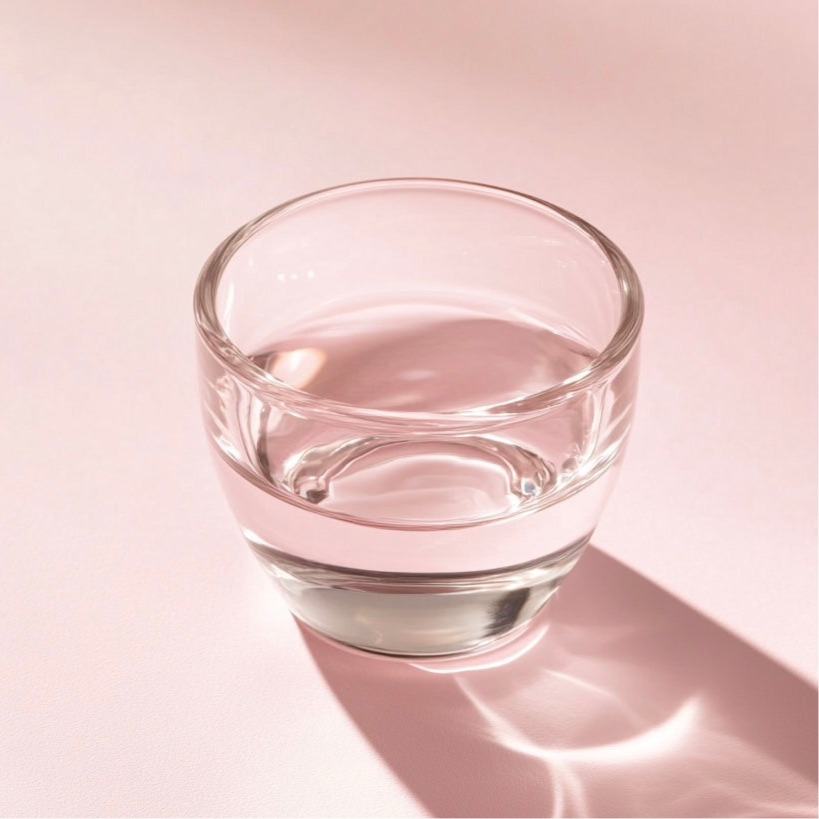
| Appearance | Crystal clear fluid |
| Viscosity | 100 cSt (centistokes) at 25 °C |
| Purity / Active Content | ≥ 100.0 % |
| Solubility | Insoluble in water. Soluble in chlorinated solvents, toluene, and xylene. |
| Functional Class / Role | Silicone Emollient |
| pH Stability Range | Chemically inert and stable across a broad pH range typical of cosmetic formulations (approximately pH 3–10). Formulators should verify within their specific system. |
| Suggested Usage Rate | 0.5 % – 20 % |
| Recommended Processing Phase | Oil phase or cool-down phase (see Section 4 for guidance) |
| Shelf Life & Storage | 2 years. Store in a tightly sealed, light-resistant container. Avoid exposure to direct sunlight, moisture, and heat. |
Formulation & Processing Guidelines
How to Incorporate
- Oil Phase Addition: Dimethicone 100 cSt can be added to the heated oil phase of O/W or W/O emulsions. It is thermally stable at typical emulsification temperatures (up to approximately 80 °C).
- Cool-Down Phase Addition: For heat-sensitive systems or when maximum volatility of other ingredients is a concern, incorporate during the cool-down phase (below 40 °C) with moderate mixing.
- Anhydrous Systems: Add directly to the oil or silicone blend at room temperature or with gentle warming; no special activation is required.
- Avoid high-shear homogenisation after addition where possible, as excessive shear may temporarily affect the silicone’s film-forming uniformity. Moderate stirring is generally sufficient.
Compatibility
- Broadly compatible with most cosmetic emollients, waxes, fatty alcohols, and emulsifier systems commonly used in skin care and hair care formulations.
- Compatible with UV filters (both organic and mineral), making it well-suited for sun care formulations.
- Incompatible with water – requires an appropriate emulsifier or silicone-compatible surfactant to incorporate into aqueous or O/W systems.
- Electrolyte / Salt Sensitivity: Dimethicone itself is chemically inert and is not affected by dissolved salts or electrolytes. However, the overall emulsion stability in high-electrolyte systems should be verified through standard stability testing.
- pH Limitations: No significant pH sensitivity within the normal cosmetic pH range. Nevertheless, final-formulation stability testing is always recommended.
- Where compatibility with novel or unusual actives is uncertain, formulators should conduct bench-scale stability and compatibility testing before scale-up.
Formulation Tips
- Start at 1–5 % to assess sensory impact before scaling up to higher loadings for richer conditioning or barrier effects.
- In O/W emulsions, combining Dimethicone 100 cSt with a small percentage of cyclomethicone or a volatile silicone can further enhance dry-touch feel and reduce residual greasiness.
- To reduce whitening/soaping, incorporate at 2–5 % in the oil phase of cream and lotion formulas; the effect is often noticeable even at the lower end of this range.
- In colour cosmetics (foundations, BB creams), use 3–8 % to improve pigment dispersion, spreadability, and skin-adherence while minimising cakey texture.
- In hair care serums and heat-protectant sprays, 1–5 % provides slip, shine, and thermal buffering without heavy build-up.
- Pre-blend Dimethicone 100 cSt with other oil-phase ingredients before adding to the aqueous phase to promote uniform droplet distribution during emulsification.
Suggested Applications
- O/W and W/O facial & body emulsions
- Gel serums and lightweight gel-creams
- Sun care creams and lotions (SPF formulations)
- Hair conditioners, leave-in serums, and heat-protection sprays
- Anhydrous balms, lip care, and colour cosmetics (foundations, primers)
Sustainability & Ethical Profile
Dimethicone 100 cSt is a synthetic polydimethylsiloxane produced through established industrial silicone chemistry. As an inert, non-biological material, it is inherently free from animal-derived inputs and is not tested on animals. While silicones are synthetic in origin, their durability and low use-level requirements mean that only small quantities are needed to achieve significant sensory and functional benefits in finished formulations.
In alignment with Crafting Cosmetics' sourcing standards, this ingredient is vegan-friendly and cruelty-free.
Regulatory & Safety Disclaimer
Disclaimer: This product is supplied as a cosmetic raw material for external use only. It is intended for cosmetic and personal care formulation applications only and should not be used as a finished product.
Technical Documentation
Share