Product Overview
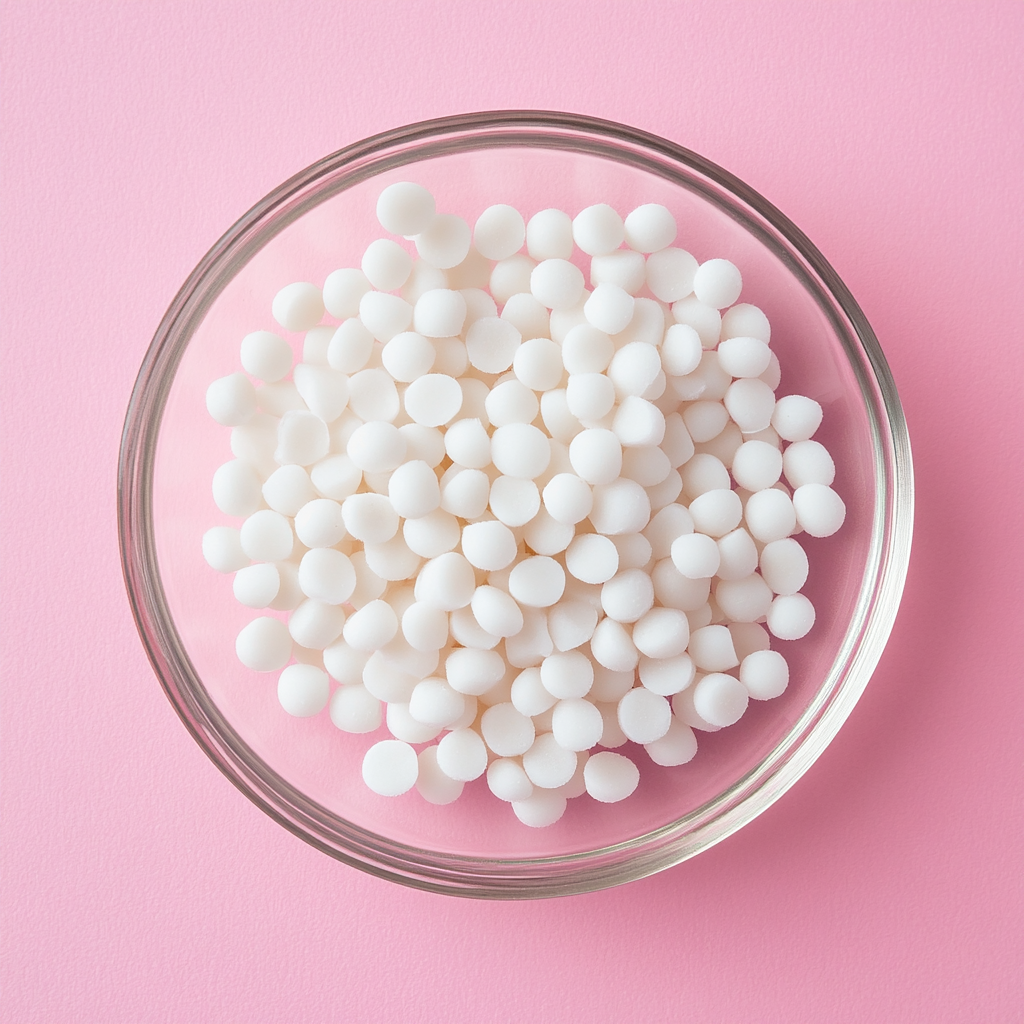
Behentrimonium Chloride is a cationic conditioning agent widely used in professional cosmetic formulations for its conditioning, detangling, and anti-static properties. It helps improve hair softness, manageability, and smoothness while providing a pleasant after-feel in hair care and selected skin care applications. Its long C22 alkyl chain contributes to its substantive conditioning performance. Formulators value its use in conditioning systems at appropriate levels, with compatibility assessed in the finished formulation.
Key Benefits & Cosmetic Applications
Behentrimonium Chloride earns its place in conditioners, treatments, and moisturising formulations through a combination of substantive conditioning, sensory refinement, and formulation versatility. Its cationic nature allows it to bind effectively to negatively charged hair and skin surfaces, delivering targeted performance where it is needed most.
- Substantive Conditioning & Softening: As a cationic quaternary ammonium compound, Behentrimonium Chloride adsorbs onto the hair cuticle and skin surface, reducing friction and imparting a soft, smooth, velvety feel without heavy residue.
- Detangling & Anti-Static Performance: Reduces inter-fibre friction and neutralises static charge, easing wet and dry combing while minimising breakage—particularly beneficial in rinse-off conditioners and leave-in treatments.
- Skin Feel & Hydration Support: In skin care formulations, it contributes a non-greasy, smooth after-feel and supports moisture retention at the skin surface, promoting a supple, conditioned complexion.
- Formulation Versatility & Compatibility: Compatible with other cationic and nonionic ingredients, making it straightforward to incorporate into a wide range of emulsified and semi-solid systems without destabilising the formula.
- Effective Conditioning: Provides conditioning benefits at appropriate use levels, with performance and skin compatibility assessed in the tested finished formulation.
Common Cosmetic Applications
- Rinse-off hair conditioners
- Deep-conditioning hair masks
- Leave-in treatments and detangling sprays
- Body lotions and moisturisers
- Cream-based cleansers
Technical Profile & Specifications
| Property | Specification |
|---|---|
| INCI Name | Behentrimonium Chloride (and) Isopropyl Alcohol |
| CAS Number | 17301-53-0 / 67-63-0 |
| Appearance | White to light yellow pellets |
| Purity / Active Content | ≥ 80.0% |
| Solubility | Dispersible in water; readily soluble in isopropyl alcohol and other lower alcohols. |
| Functional Class / Role | Cationic Conditioner |
| pH Stability Range | 5.0 — 8.0 |
| Suggested Usage Rate | 0.5% – 5.0% |
| Recommended Processing Phase | Typically incorporated into the heated oil phase or added to warm aqueous phase under gentle agitation in emulsion systems. |
| Shelf Life & Storage | 2 years. Store in a dry place in a tightly sealed container. Avoid exposure to direct sunlight, moisture, and excessive heat. |
Formulation & Processing Guidelines
How to Incorporate
- In emulsified systems (O/W conditioners, lotions), Behentrimonium Chloride is generally added to the heated phase and melted/dispersed under gentle stirring before emulsification. Specific temperature thresholds should be confirmed against supplier technical data.
- This grade includes Isopropyl Alcohol as a carrier; select mixing, ventilation, and heating conditions
using the confirmed supplier SDS. - Avoid prolonged exposure to excessively high temperatures to preserve ingredient integrity. Refer to supplier documentation for precise thermal limits.
Compatibility
- Compatible with: Other cationic surfactants and conditioning agents, nonionic emulsifiers, fatty alcohols (e.g., cetearyl alcohol), and most common cosmetic thickeners.
- Caution with anionic systems: As a cationic material, Behentrimonium Chloride may interact with anionic surfactants (e.g., SLS, SLES) or anionic polymers, potentially reducing conditioning efficacy or causing precipitation. Formulators should conduct compatibility testing when combining with anionic ingredients.
- Electrolyte / salt sensitivity: Specific electrolyte tolerance data is not provided in the current documentation. Bench-level stability testing is advised when formulating with high salt concentrations.
- If full compatibility data is uncertain, formulators should conduct accelerated stability and compatibility testing before finalising a formula.
Formulation Tips
- Begin at the lower end of the usage range (0.5–1.0%) for light conditioning in leave-in products, and increase toward 3.0–5.0% for intensive rinse-off conditioners or hair masks.
- Pairing with fatty alcohols such as cetearyl alcohol can enhance the conditioning deposit and improve the creamy texture of emulsions.
- In skin care lotions, lower concentrations (0.5–1.5%) are typically sufficient to achieve a smooth, conditioned skin feel without heaviness.
- Ensure thorough homogenisation during the emulsification step to achieve a uniform, stable product.
Suggested Applications
- Rinse-off and leave-in hair conditioners
- Deep-conditioning and reparative hair masks
- Body lotions, creams, and moisturisers
- Cream-based or low-foam cleansers
- Scalp treatments and detangling sprays
Sustainability & Ethical Profile
Behentrimonium Chloride may be associated with plant-based sourcing when supported by supplier documentation. Its long C22 alkyl chain contributes to its conditioning performance, making it useful in formulations designed to improve hair feel and manageability. Renewable-origin claims should be made only when the ingredient's specific feedstock and sourcing are verified.
In alignment with Crafting Cosmetics' sourcing standards, this ingredient is vegan-friendly and cruelty-free.
Regulatory & Safety Disclaimer
Disclaimer: This product is supplied as a cosmetic raw material for external use only. It is intended for cosmetic and personal care formulation applications only and should not be used as a finished product.